
ACATENANGO VOLCANO
GLAMPING OVERNIGHT TOUR
FROM ANTIGUA OR
GUATEMALA CITY
ACATENANGO VOLCANO GLAMPING OVERNIGHT TOUR FROM ANTIGUA OR GUATEMALA CITY
Sleep above the clouds, front row to an erupting volcano.
- Minimum 2 PAX
- Maximum 12 PAX
- Destination: Acatenango Volcano (3,976 m / 13,045 ft)
- Departure: Antigua or Guatemala City
- Departure Time: 6:00 am Day 1 (Guatemala City) · 8:00 am Day 1 (Antigua)
- Return Time: 12:30 pm Day 2
- Duration: 2 days / 1 night
- Difficulty: Challenging — 4 of 5
- WHAT TO EXPECT!
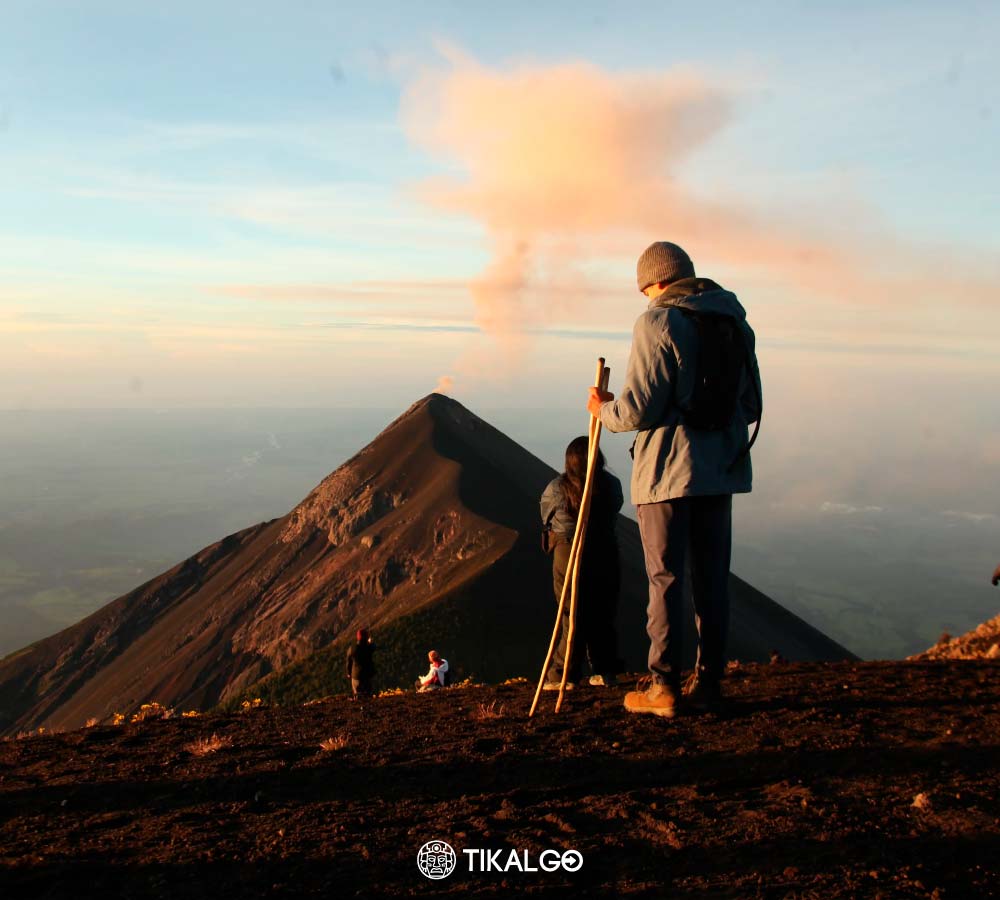
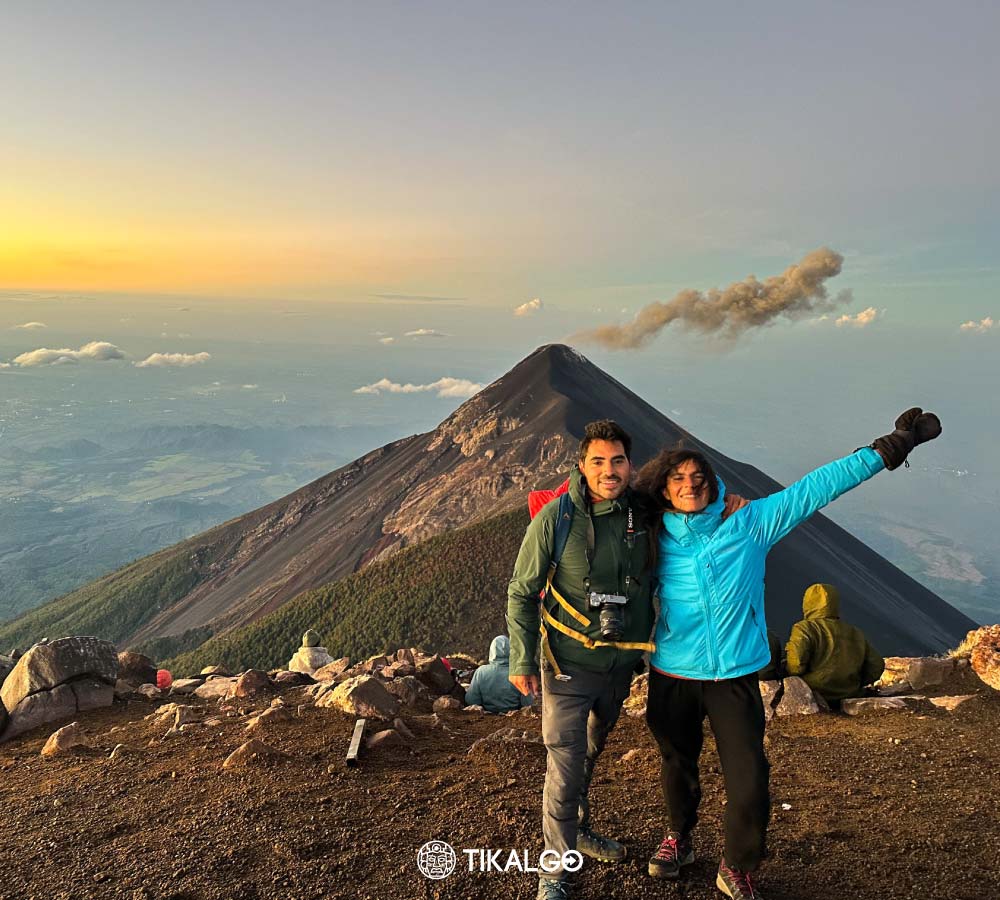
Acatenango has become Guatemala’s signature adventure over the last five years, and for good reason. It gives you everything at once: the challenge, the effort, the reward of standing on the summit, sunsets that stop conversation, and sunrises you’ll describe for years. And just when you think the mountain has shown you everything, you turn your head — and there is Volcán de Fuego, one of the most active volcanoes in the Americas, throwing ash, smoke and lava into the sky a few kilometres away.
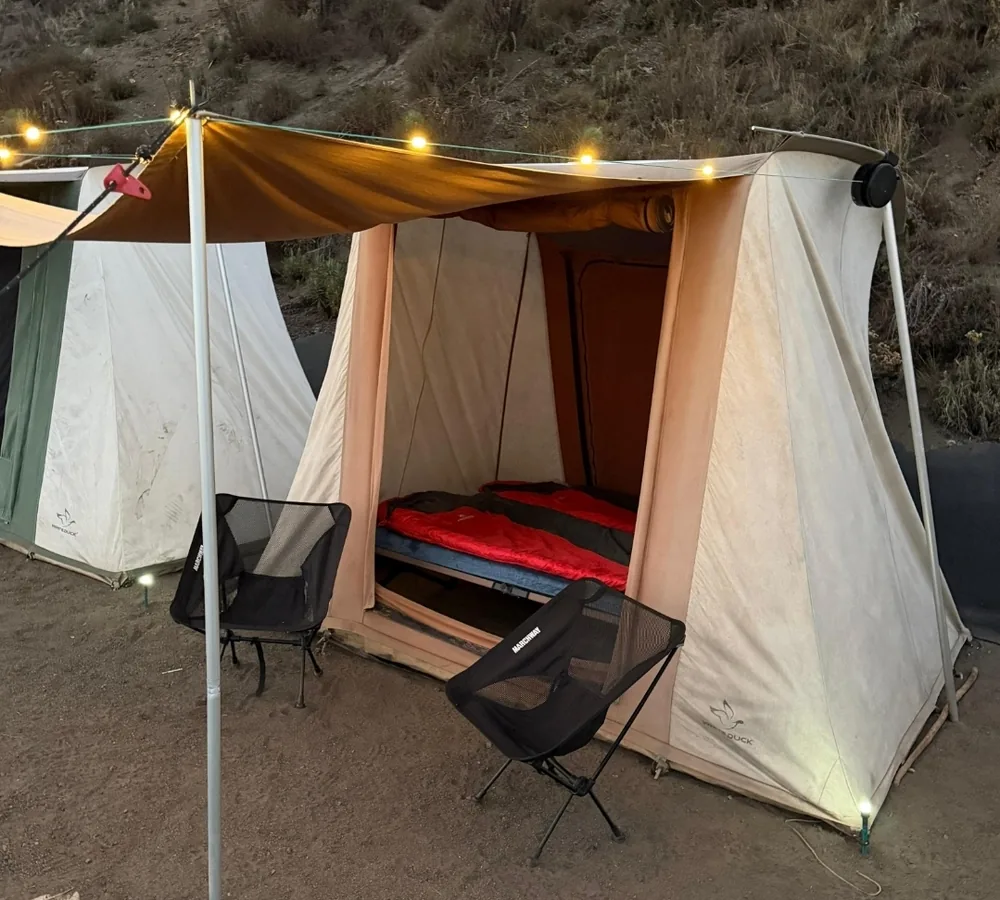
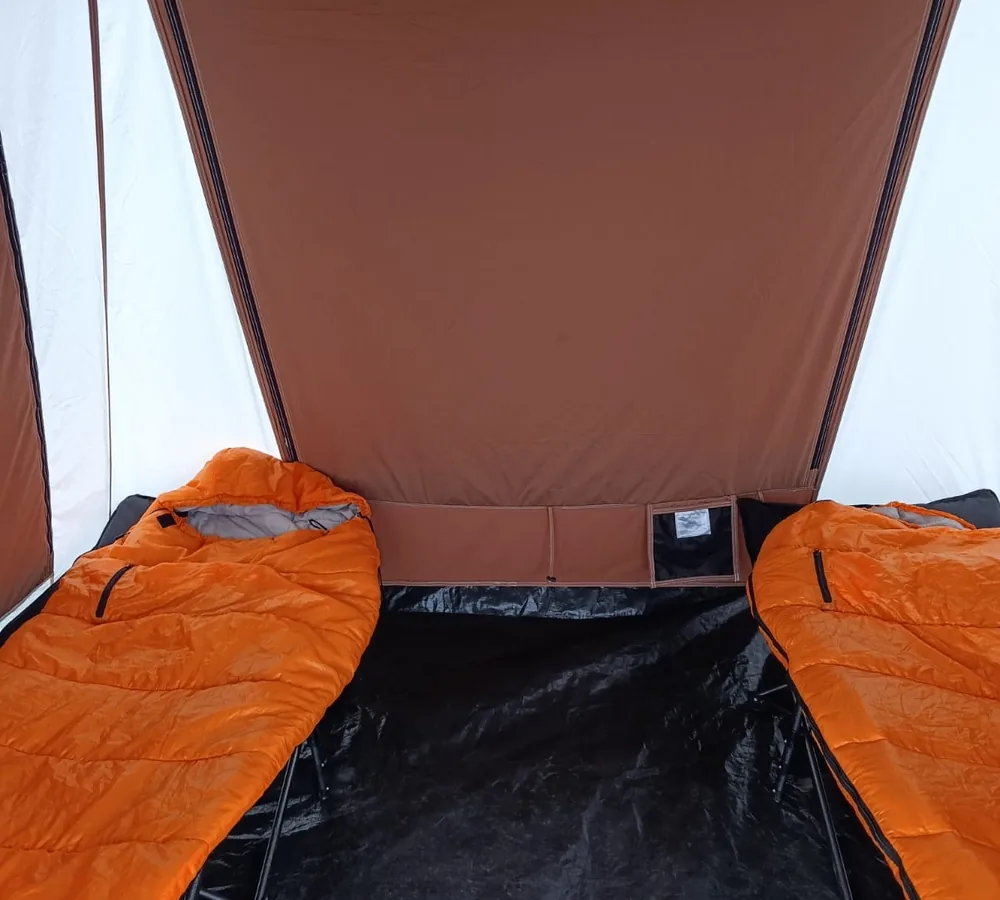
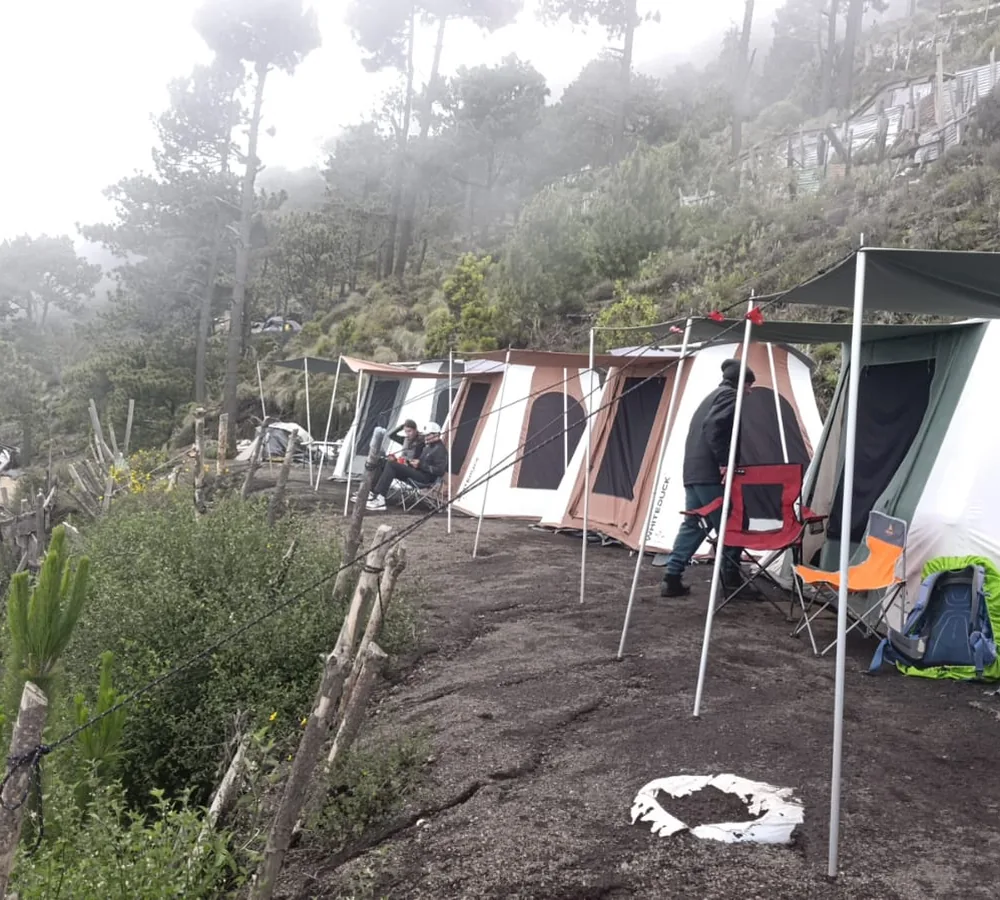
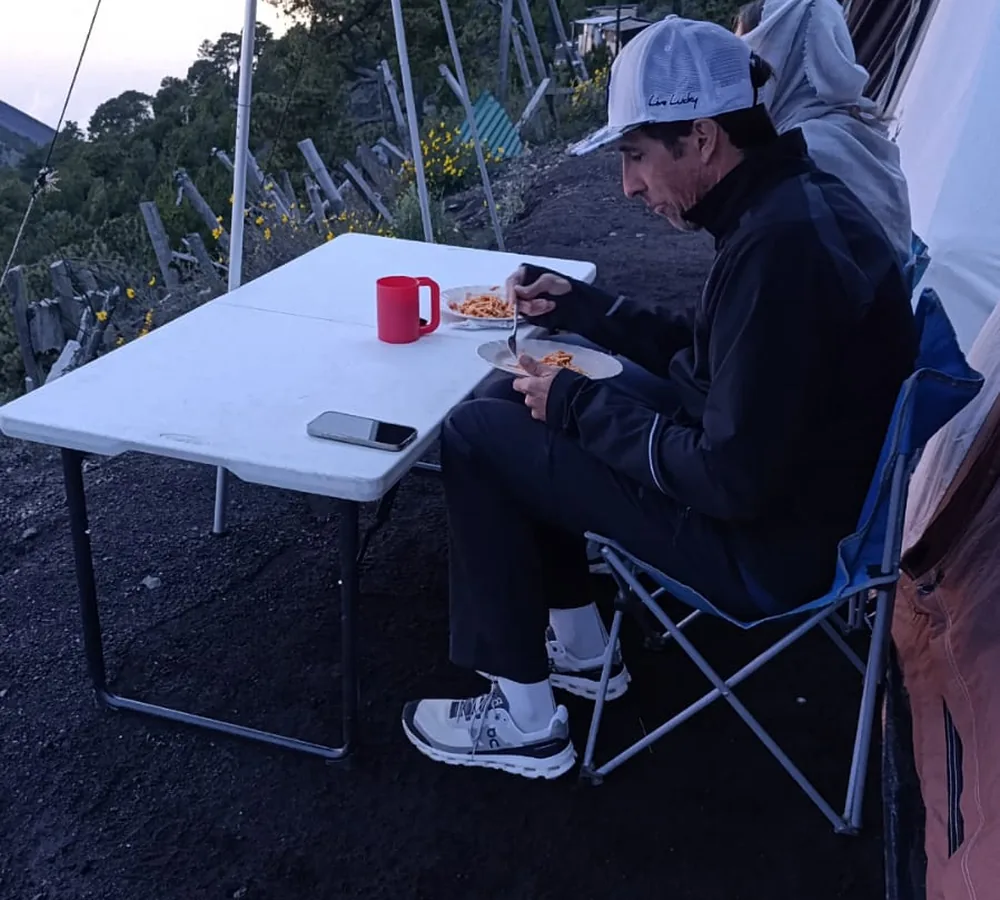
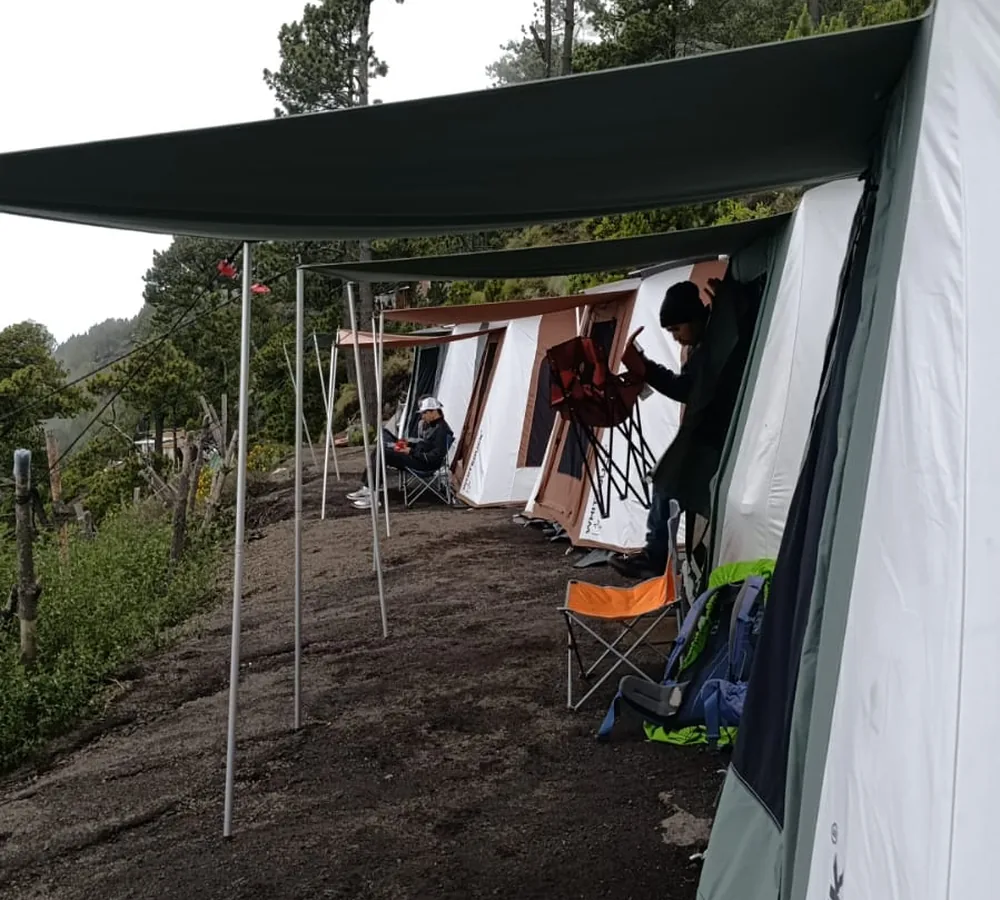
This is that trek, with the night handled properly. Instead of wrestling a backpacking tent into frozen ground in the dark, you arrive to a camp already standing: a canvas cabin tent pitched and waiting, a raised camp cot with a sleeping bag, and a fire going. Sleeping off the ground at 3,600 metres is the difference between a night you endure and a night you actually sleep through. Dinner is cooked while Fuego erupts in front of you.
The day begins with pickup from your hotel and the drive to the village of La Soledad, where you meet your guiding team. Our camp crew heads up ahead of the group with the equipment — anything you’d like carried up, hand it over before they leave. Then we start climbing.
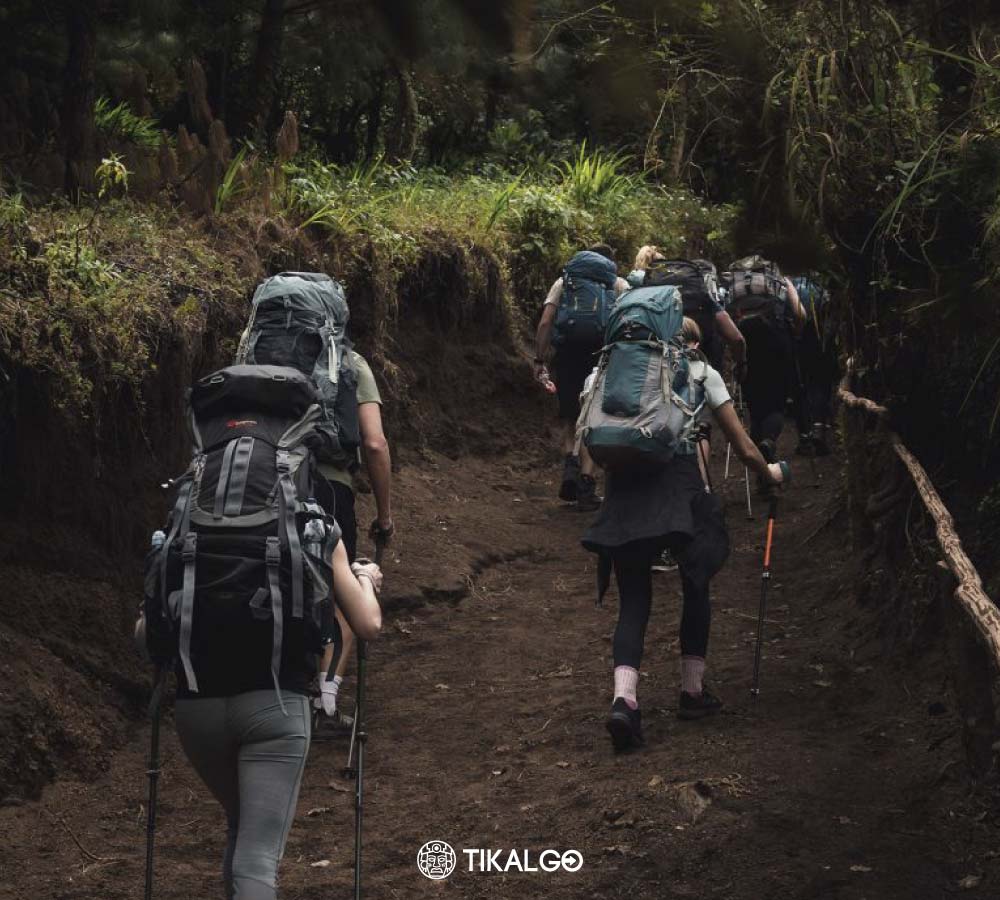
The first 45 minutes set the tone. We go slow on purpose: this is where your body adapts, where you find your breathing, your stride, and the rhythm between them. We call it walking at the pace of your own feet, and it’s the single thing that makes the difference between a hard day and a brutal one. Your guides are certified mountain guides with remote-area first aid training, and they will manage the pace, the stops, the water and the snacks so you can concentrate on the mountain.
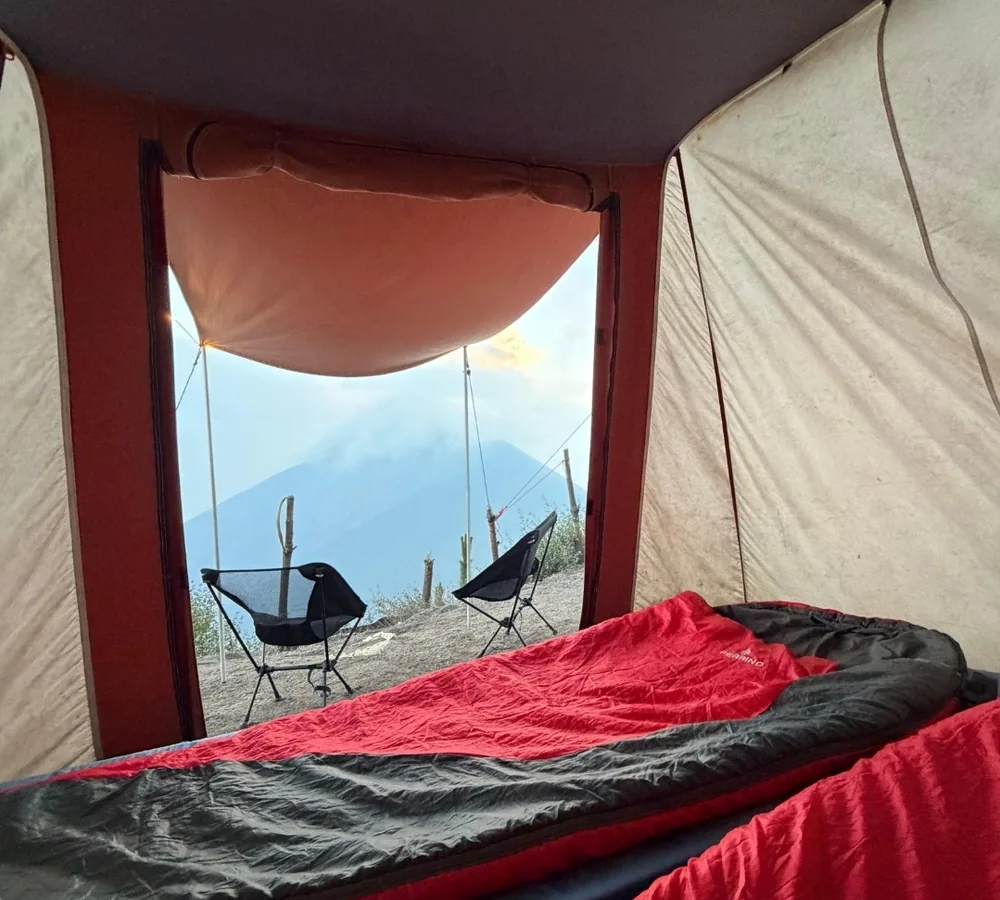
Around 4:00–4:30 pm, camp comes into view — and so does Fuego. On clear days you’ll also pick out Volcán de Agua behind you, and Lake Atitlán far to the west. You change into warm clothes, the fire gets going, and dinner is served as the light goes.
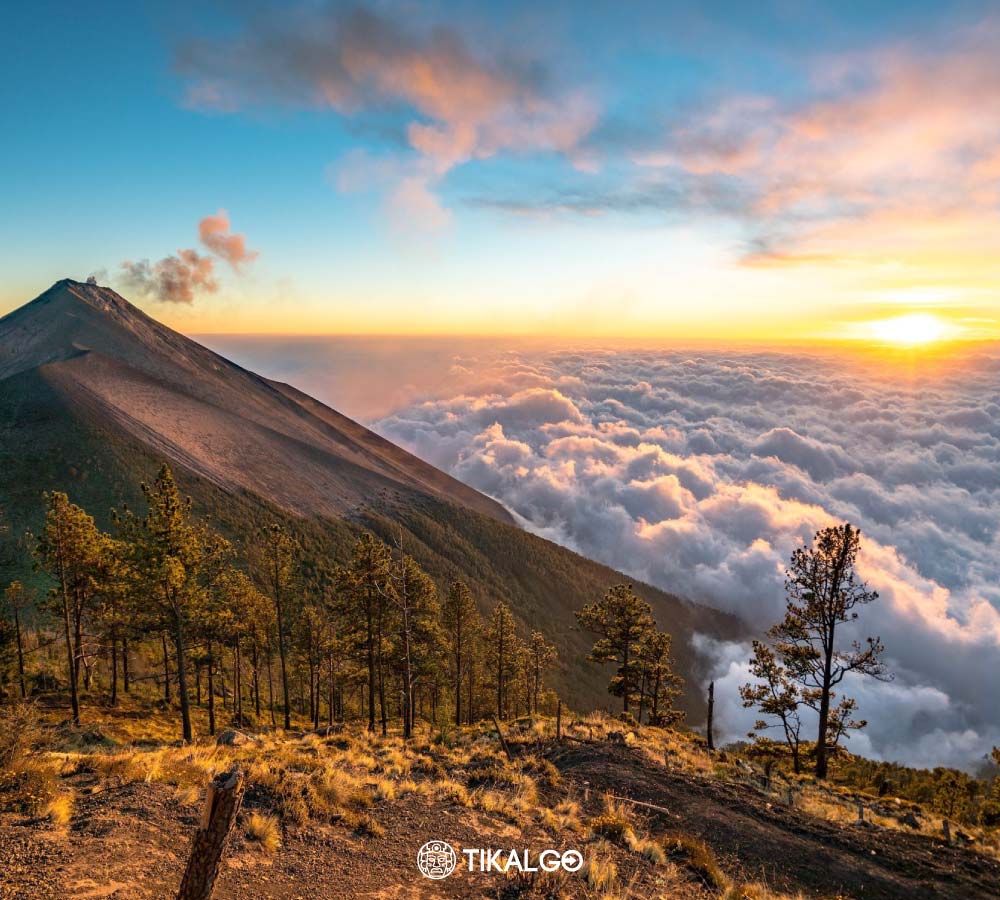
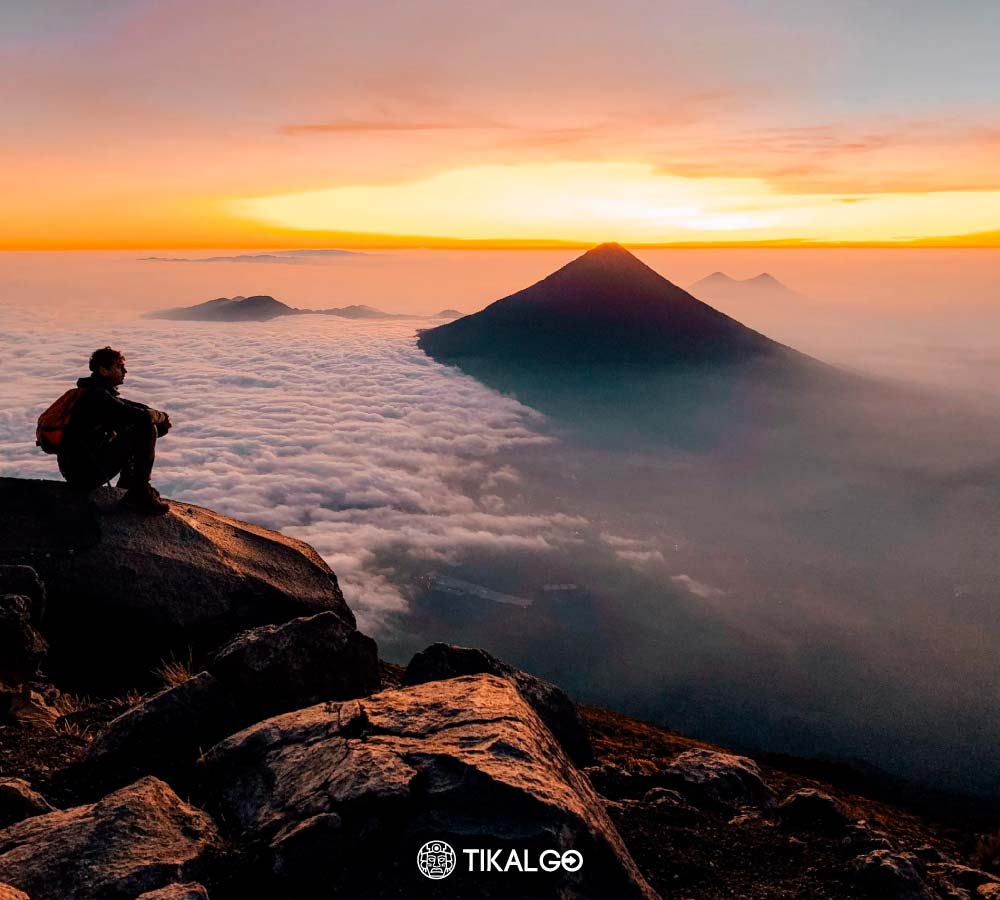
Before bed we make a plan for the morning. Option one: hike to the summit for sunrise. Option two: watch sunrise from camp, then climb. Normally the choice is yours, but if the forecast points to high winds or heavy cloud we’ll call it from camp — the view is spectacular either way, and one of our team stays behind with your gear. From the top, the sunrise breaks over the horizon and floods the entire valley in gold, with volcanoes stacked into the distance as far as you can see.
Then it’s back down to camp for breakfast, and the descent by the same route — roughly three and a half hours, easier on the lungs and harder on the knees. You’ll be back at your hotel by early afternoon, tired in the best possible way.
- THE HIKE, STAGE BY STAGE
From the village up through the cornfields and cultivated slopes. This is the steepest, most demanding stretch of the whole trek and it comes first, while your body is still adapting. There’s a section of carved steps, then the famous Palo Hueco (Hollow Log), and just past it the forest closes in around you.
Your body has figured out what kind of day this is. The pack feels like part of you. The air turns cool and clean, and everything around you is green — just the trail and the forest. Steep in places, but a pleasure to walk. We pass the park entrance gate and a series of rest points on the way to El Conejito, where there’s usually a small stand selling snacks and drinks.
A completely different microclimate: volcanic sand underfoot, bleached dead trees, and low scrub that looks unmistakably like a field of Treasure Trolls. Warmer in the sun, sharply colder without it. A run of switchbacks and inclines takes you from El Conejito up to El Conejo, then an easier trail out to El Tonel — the junction where you can branch up to La Horqueta or continue contouring around Acatenango toward camp.
The most beautiful hour on the mountain, and almost flat. The trail wraps around the volcano with barely any elevation change — like walking in a park, if the park had Volcán de Agua rising behind you and Fuego appearing ahead. All that’s needed here is patience, a camera and a bit of time to take it in. We aim to arrive well before sunset.
Steep, loose volcanic sand in the cold and the dark, carrying only what you need. Short, honest and worth every step.
Same route down. Easier on the breath, demanding on the legs and knees. Trekking poles help.
- $425
- PAX
- ITINERARY
Day 1
06:00 am — Pickup from your hotel in Guatemala City (08:00 am for Antigua pickups)
09:00 am — Arrive in La Soledad village, meet the guiding team, gear check and briefing
09:30 am — Begin the ascent
01:00 pm — Lunch on the trail
04:00 pm — Arrive at the glamping camp, settle in and change into warm layers
05:30 pm — Sunset over the Pacific and, cloud permitting, eruptions from Volcán de Fuego
07:00 pm — Dinner around the fire
08:30 pm — Plan the morning, then lights out
Day 2
04:00 am — Wake up and hike to the summit of Acatenango
05:30 am — Sunrise from 3,976 m (13,045 ft)
07:00 am — Return to camp for breakfast
08:30 am — Begin the descent
12:00 pm — Arrive in La Soledad and board the vehicle
12:30 pm — Drop-off at your hotel
FAQs
Acatenango is a challenging hike — we rate it 4 out of 5. The ascent covers roughly 1,500 metres of elevation gain over 6.5 hours of walking, and the steepest section comes first, through the farmland above La Soledad. No technical climbing skill or prior mountaineering experience is needed, but you should be comfortable walking uphill for several hours with a daypack. Our guides deliberately set a slow pace for the first 45 minutes so your body can adapt to the altitude.
The ascent to camp takes about 6.5 hours, the summit push on the second morning takes 2 hours, and the descent takes 3.5 hours. That is roughly 12 hours of walking spread across two days.
You should be able to walk uphill continuously for two hours without stopping to recover. Regular hikers manage the trek comfortably; people who don’t exercise regularly usually finish but describe day one as hard. Aerobic fitness matters far more than age — we have taken guests in their sixties to the summit.
Acatenango’s summit is 3,976 metres above sea level, or 13,045 feet. The glamping camp sits at approximately 3,600 metres.
Volcán de Fuego erupts several times an hour during active periods, and the camp faces it directly from about 5 kilometres away. Most guests see multiple eruptions from camp, and the sound carries even when cloud blocks the view. Nothing about a volcano is guaranteed and cloud cover is possible in the rainy season, but Fuego has been in near-continuous eruption for years.
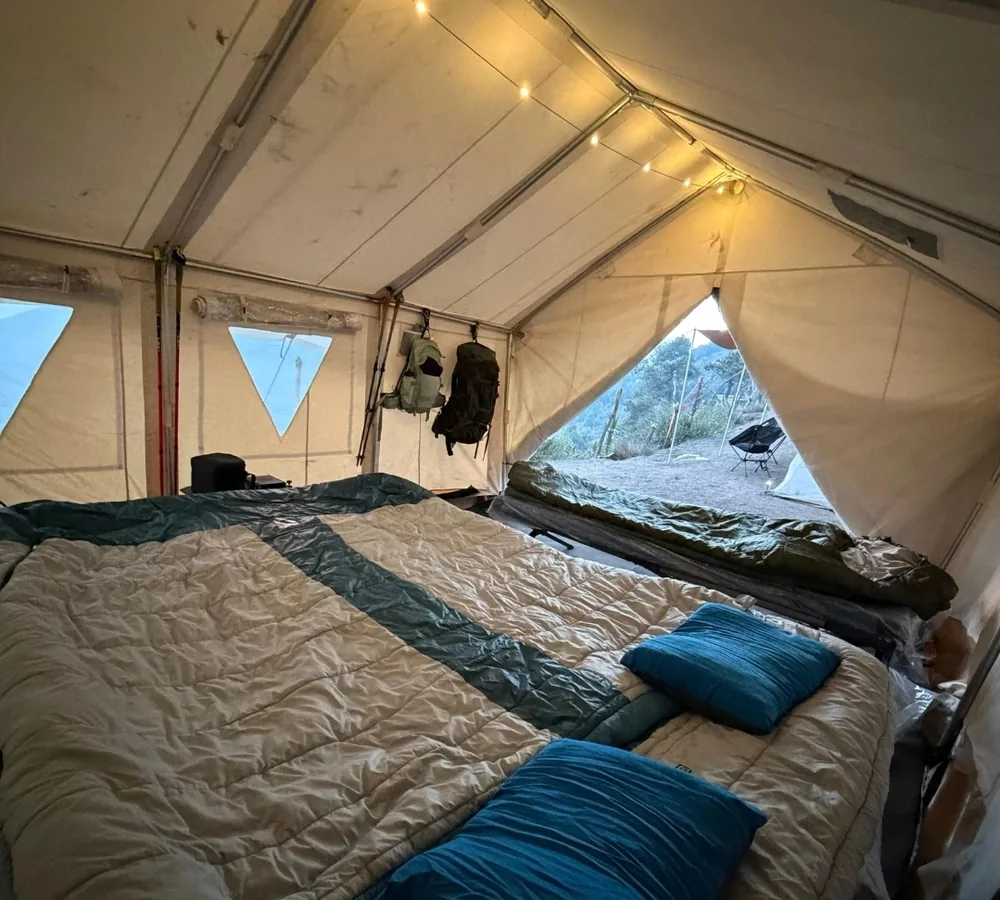
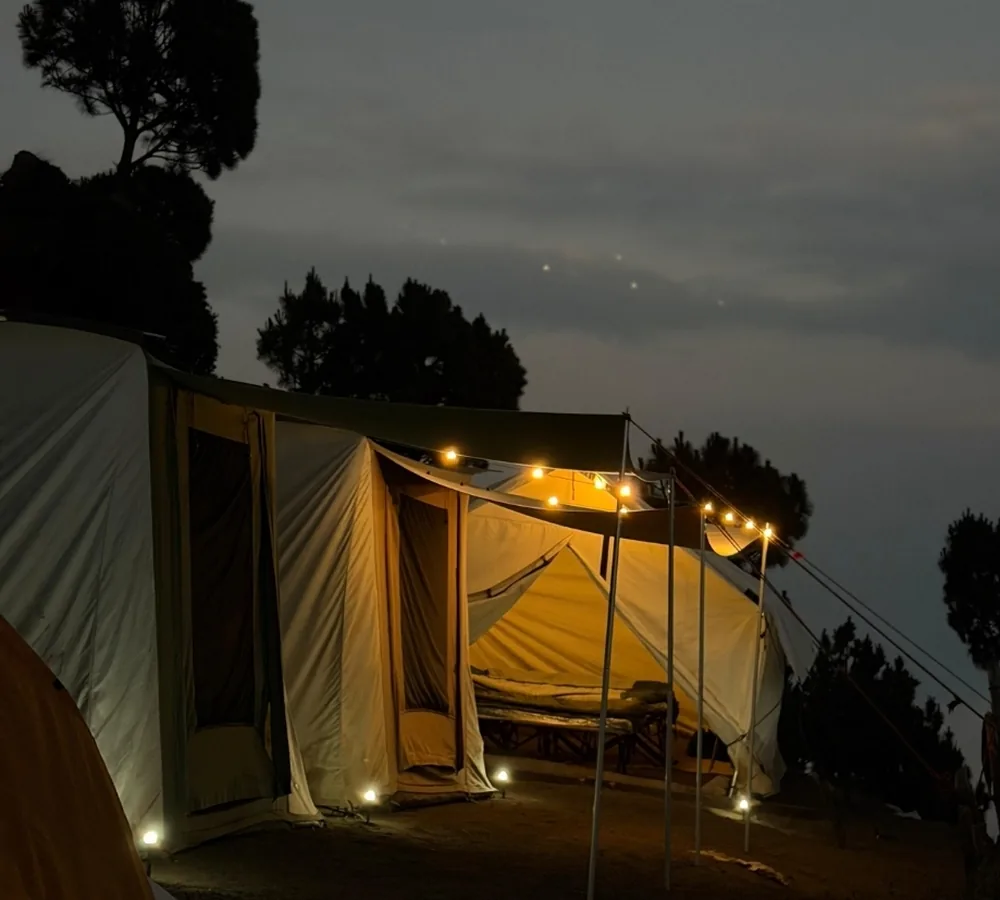
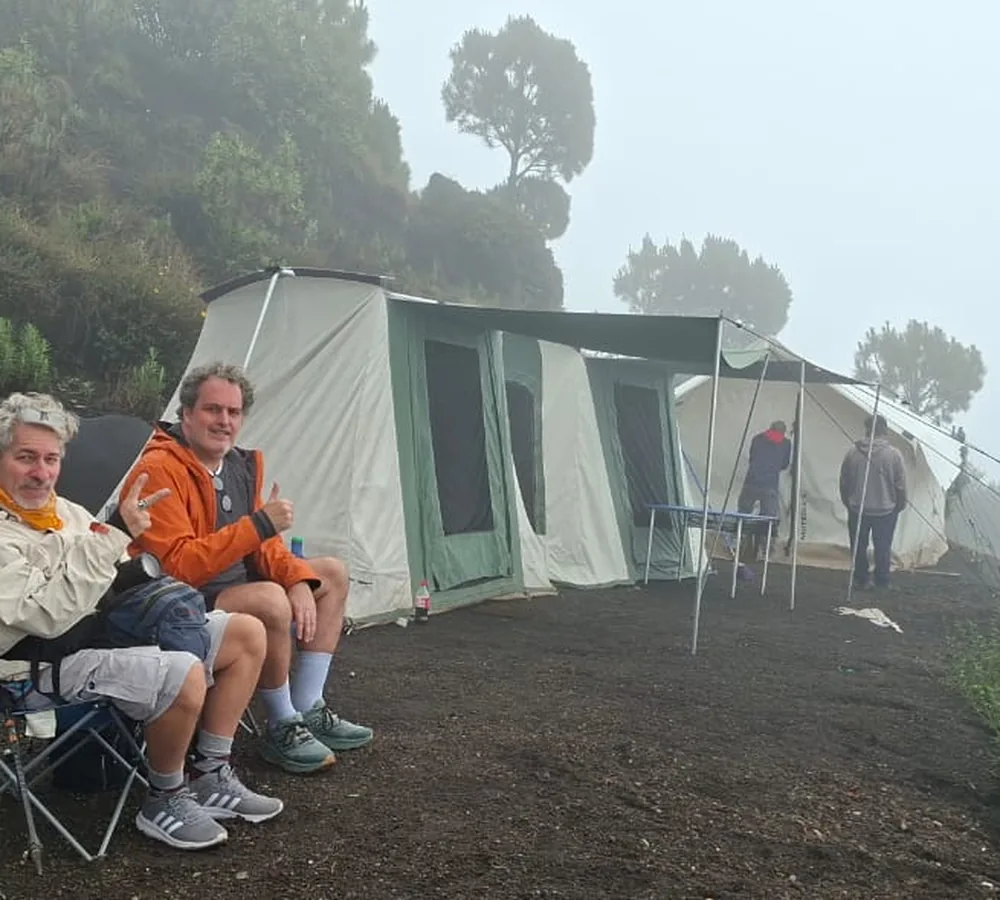
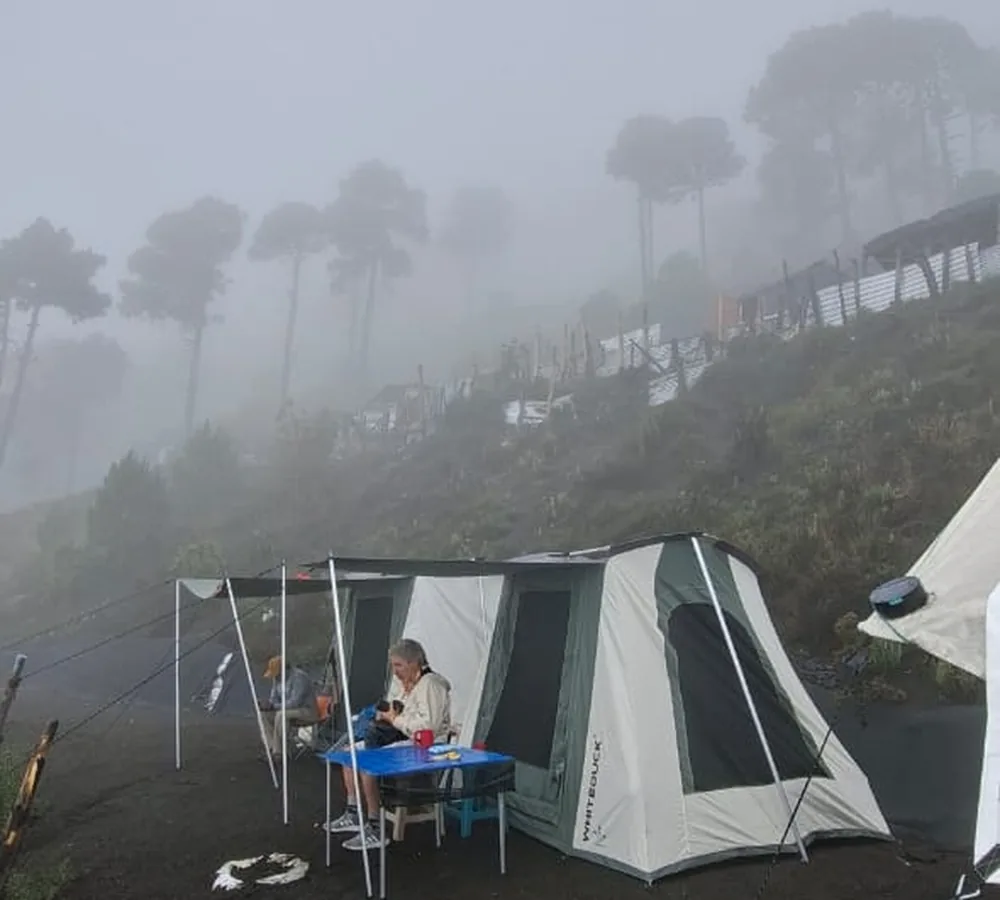
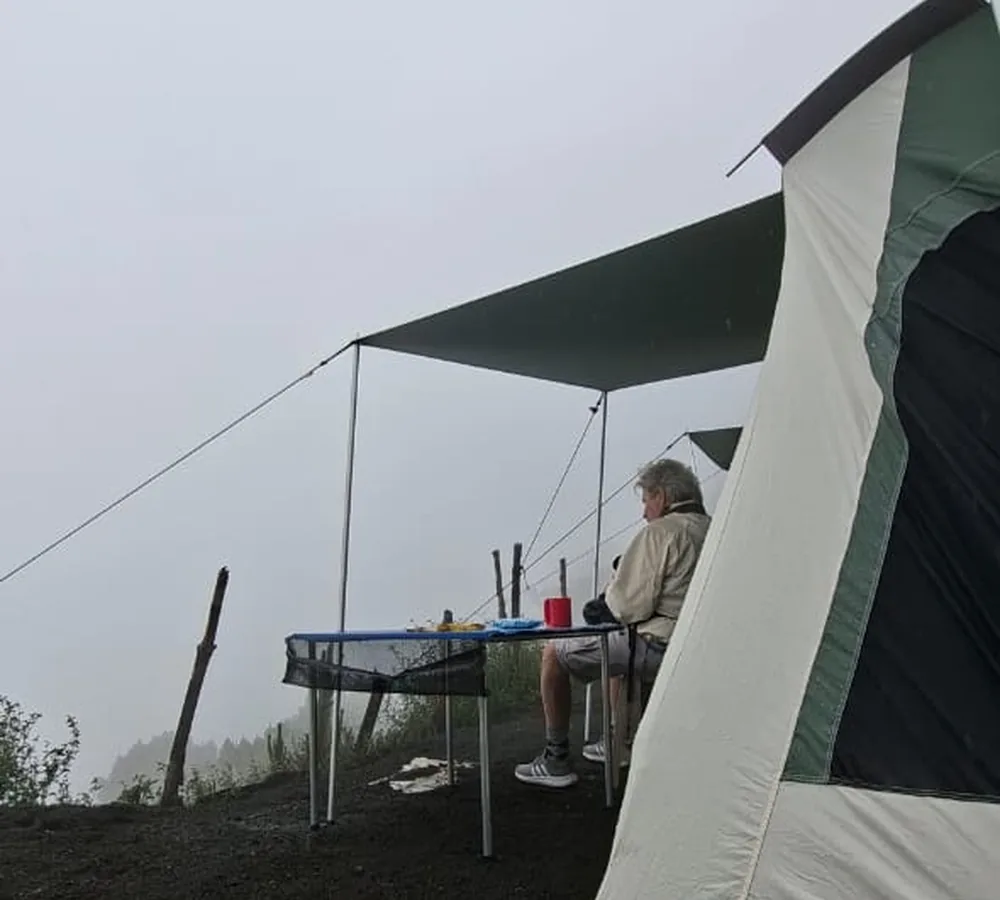
Your tent is a sturdy White Duck Prota canvas cabin tent, pitched and waiting when you arrive, with a raised camp cot inside instead of a mat on the ground. Standard Acatenango trips mean helping pitch a backpacking tent in the cold and sleeping on foam on frozen volcanic soil. Sleeping off the ground at 3,600 metres makes a substantial difference to how much you actually rest. The canvas is fire- and water-resistant, and tents are configured single, double, or triple. What this is not: there is no electricity, no shower, and the toilet is a latrine. This is a mountain camp made comfortable, not a hotel at altitude.
Each tent contains a raised camp cot, a sleeping bag, and a rain poncho, and is pitched and ready before you arrive. The tents are White Duck Prota canvas cabin tents with fire- and water-resistant fabric, arranged as single, double, or triple occupancy depending on your group. There is no electricity or lighting at camp — power sources aren’t permitted at this elevation in the park — so bring a headlamp and a power bank if you want to charge a phone or camera. Nights drop to around freezing, so the sleeping bag does the work and a warm layer to sleep in makes a real difference.
Camp has a latrine, located roughly 5 metres past the last tent at the edge of the camp. There are no showers and no running water at camp — bring hand sanitiser or wet wipes, and pack out anything you bring in. You’ll be back at your hotel in Antigua or Guatemala City by early afternoon on day two, so it’s one night without washing.
Night temperatures at camp typically fall to between 0 °C and 5 °C (32–41 °F), and wind chill can push it lower. This is the single thing most guests underestimate. There is no heating at camp beyond the campfire, so bring a warm layer to sleep in as well as gloves and a hat — the sleeping bag alone isn’t always enough at freezing.
The price includes round-trip transport from Antigua or Guatemala City, certified mountain guides with wilderness first aid training, all park and volcano entrance fees, your private canvas tent with a raised camp cot and sleeping bag, a rain poncho, porters who carry all camp equipment, three meals (lunch, dinner, breakfast) and purified water for the whole trek. Not included: extra snacks, guide gratuities, horse assistance, and travel insurance.
Bring a headlamp, broken-in hiking boots, a 40-litre backpack, 2 litres of water, a warm insulating layer, a rain jacket, gloves, a hat, sunscreen, lip balm, a power bank, and hand sanitiser or wet wipes. The headlamp and power bank matter most: there’s no electricity at camp, and you’ll be walking to the summit in the dark at 4 am. Avoid jeans and cotton socks, and cut your toenails before you hike — the descent is unforgiving on long nails.
November to April is the dry season and offers the clearest skies and the highest chance of unobstructed eruption views. May through October brings afternoon rain and more cloud, but also greener landscapes and fewer people on the trail — a rain jacket is essential in those months.
Yes. We pick you up directly from your hotel in Antigua and drive about one hour to the trailhead at La Soledad, returning you to your hotel by early afternoon on day two. Pickup from Guatemala City is also available on the same tour.
Is altitude sickness a risk on Acatenango?
Mild altitude symptoms such as headache, shortness of breath, and poor sleep are common above 3,500 metres and affect some guests at camp. Serious altitude sickness is rare at Acatenango’s elevation. Our guides are trained to recognise the symptoms, they control the pace to reduce the risk, and they carry a first aid kit. Tell your guide immediately if you feel unwell.
Tours run in rain, and your guide adjusts the plan for safety. If high winds or dense cloud make the pre-dawn summit push unsafe, we watch sunrise from camp and climb afterwards, with one team member staying behind with your gear. Tours are only cancelled outright when park authorities close trail access, in which case you can reschedule or receive a refund.
- WHAT WE INCLUDE
- Round-trip ground transportation from Antigua or Guatemala City
- Certified mountain guides
- Guides certified in wilderness / remote-area first aid
- First aid kit
- Local porter team carrying all camp equipment
- Dedicated fire keeper at camp
- Volcano and park entrance fees
- Private White Duck Prota canvas tent, pitched before you arrive
- Raised camp cot
- Sleeping bag
- Rain poncho
- All meals: 1 lunch, 1 dinner, 1 breakfast
- Purified water for the ascent and descent
- A volcano, and a lot of fun! 😄
- WHAT WE DON'T INCLUDE
- Extra snacks
- Personal power bank / charger
- Guide gratuities
- Horse assistance
- Travel insurance
- WHAT TO BRING
Clothing
- Comfortable, breathable shirts — dry-fit preferred, most come with UV protection
- Comfortable trousers, not loose-fitting; technical fabric is best (jeans are not recommended)
- Hiking boots or trail shoes already broken in — never brand new, no sandals
- Merino wool socks, low cotton content
- Fleece jacket or windbreaker
- Rain jacket (May through October)
- Gloves, especially if your hands are sensitive to cold
- One warm layer for camp — nights drop close to freezing
Gear
- Backpack around 40 L
- Hydration system, Camelbak-style — 2 L of water recommended
- Headlamp or flashlight
- Buff or neck gaiter
- Camera and a power bank
Sun and skin
- Cap or hat, sunglasses, sunscreen, lip balm with SPF
Personal
- Personal toiletries
- Any personal medication — please hand it to the paramedic or lead guide at the briefing
- Trim your toenails properly before the hike. It sounds minor. It isn’t.
- Important Note on Schedules
Please be advised: All tour times and itineraries are subject to change based on local weather conditions and park safety regulations.
In the event of heavy tropical rain, dense fog, or restricted trail access, schedules may be adjusted without prior notice to ensure the safety and comfort of our guests. We recommend arriving 15 minutes early to check for any real-time updates from your guide.
Sunrise may be viewed from the summit or from camp depending on wind and visibility on the morning — that call is made by your lead guide for your safety.
- CANCELLATION POLICY
7 days before the booking date: You get full refund.
6 to 3 days before the booking date: You get 50% refund.
48 hours before the booking date: There is no refund policy.